
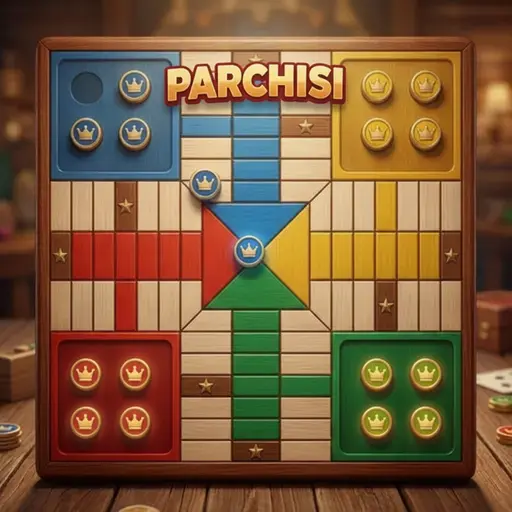
About Parchisi
Welcome to YioGames, your definitive source for understanding and mastering the world’s most enduring and engaging games. Today, we’re diving deep into Parchisi, a timeless board game of race, strategy, and dice rolls that has captivated players for centuries. Known by many names—Parcheesi, Parchís, Pachisi, and even Ludo in some regional variants—Parchisi offers a compelling blend of luck and calculated tactics, making every playthrough a unique challenge.
Whether you’re new to the board or a seasoned strategizer looking to refine your skills, this guide will unpack the core mechanics, strategic depth, and various ways to enjoy this classic game, including how to play the browser version available right here on YioGames.
Parchisi: The Classic Race and Strategy Dice Game
What is Parchisi? Objective at a Glance
At its heart, Parchisi is a dynamic board game categorized under the genres of Race game, Strategy, and Dice game. Its objective is elegantly simple: each player aims to be the first to move all four of their colored pawns (or tokens/pieces) from their starting area, navigate them clockwise around the board, and ultimately secure them within their respective home area in the center of the board. This seemingly straightforward race is complicated—and made thrilling—by player interaction, calculated risks, and the unpredictable roll of the dice.
Parchisi vs. Ludo: Understanding the Key Differences
While often grouped together due to their shared ancestry, Parchisi (specifically the variant discussed here, similar to Parcheesi) and Ludo have distinct rule sets that significantly impact gameplay. Understanding these differences is crucial for players accustomed to one variant transitioning to another. The YioGames version, titled ‘igra-parchis-kosti’ (Parchis dice game), firmly aligns with the Parchisi ruleset, emphasizing the use of two dice and a specific pawn entry mechanic.
| Feature | Parchisi (Variant Discussed) | Ludo (Common Variant) |
|---|---|---|
| Number of Dice | Two | One (typically) |
| Pawn Entry Roll | 5 (on one or both dice) | 6 (typically) |
| Capturing Opponents | Yes, sends back to start | Yes, sends back to start |
| Forming Blockades | Yes, with two pawns | Yes, with two pawns |
| Bonus for Capture | Yes (e.g., 20 spaces) | Yes (often 20 spaces) |
| Bonus for Home | Yes (e.g., 10 spaces) | Yes (often 10 spaces) |
| Extra Turn on Doubles | Yes | Common in many variants |
Parchisi Unpacked: Rules and Core Mechanics
To truly appreciate Parchisi, it’s essential to grasp its fundamental rules and mechanics. These elements combine to create a gameplay loop that is easy to learn but offers considerable strategic depth, especially when playing against cunning AI or human opponents.
Getting Started: Board, Pawns, and Entry
The journey in Parchisi begins with a clear setup that establishes each player’s identity and initial position on the board. A game can involve 2-4 players, each vying for victory.
- Player Choice: Before the game commences, players select one of four distinct colors: Red, Blue, Yellow, or Green. Your chosen color determines your territory and pawns.
- Pawn Control: Each player commands a set of four pawns (also referred to as tokens or pieces) that match their selected color. These pawns are your avatars on the board.
- Starting Area: At the outset, all four of your pawns reside in their designated starting area, often a color-matched “nest” or base situated at one corner of the board.
- Entering the Track: To bring a pawn onto the main playing track, it requires a specific dice roll. You must roll a 5 on one of your two dice. If you roll a 5 and have pawns in your base, you must move one pawn onto the starting square of your color. Rolling two 5s allows you to bring two pawns out, or one pawn out and move another.
The initial phase often involves a race to get pawns onto the board, as a lack of active pawns limits your movement options and overall strategic presence.
Your Turn: Rolling Dice and Moving Pawns
Parchisi progresses in a turn-based fashion, with each player executing a sequence of actions that depend heavily on the dice rolls and their current board state.
- Rolling the Dice: Players take turns rolling two dice. The values shown on these dice dictate the total number of spaces pawns can move.
- Moving Pawns Clockwise: Pawns move clockwise around the board, following the designated path. You can choose to move a single pawn the total sum of the two dice, or split the moves between two different pawns (e.g., if you roll a 3 and a 4, you can move one pawn 7 spaces, or move one pawn 3 spaces and another pawn 4 spaces).
- Strategic Decision: The choice of which pawn to move, and how to allocate the dice rolls, is a critical strategic decision on every turn. Factors such as positioning for captures, forming blockades, or advancing towards home must be weighed carefully.
- Rolling Doubles: A significant mechanic involves rolling doubles (e.g., two 3s or two 6s). Rolling doubles typically grants an extra turn, allowing the player another opportunity to roll the dice and move their pawns. This can create powerful chains of moves, rapidly changing the game’s momentum. Note that while some variants have special rules for rolling three doubles in a row (often sending the last pawn moved back to start), this specific rule is not confirmed for the YioGames browser version.
Mastering the art of dice management—knowing when to combine rolls, when to split them, and how to utilize extra turns—is fundamental to a successful Parchisi strategy.
Strategic Maneuvers: Capturing and Blockading
Parchisi is not merely a race; it’s a battle for control and position, defined by two key interactive mechanics: capturing opponent pawns and forming blockades.
- Capturing Opponent Pawns: If your pawn lands on a square occupied by an opponent’s single pawn, you “capture” it. The captured opponent pawn is immediately sent back to its starting area, effectively resetting its progress. This is a powerful offensive move, as it not only disrupts an opponent’s game plan but also grants you bonus moves.
- Safe Spaces: Certain squares on the board are designated as “safe spaces” (often marked with a star or special color). Pawns on these squares are protected from capture. However, your own pawns can land on safe spaces and are not immune to being captured by an opponent if they are on a *regular* square that happens to be a safe space for *another* color. The home entry path for each color is typically also a safe zone for that color’s pawns.
- Forming Blockades: A crucial defensive and offensive tactic involves forming “blockades.” This occurs when two of your own pawns occupy the same square. A blockade prevents any opponent’s pawn from passing through that square, effectively creating a temporary wall on the board. Opponent pawns cannot land on, or jump over, a blockade.
- Breaking Blockades: Blockades are powerful but not permanent. To move a pawn that is part of a blockade, you must use one of your dice rolls to move it. Once one of the pawns moves, the blockade is broken. The strategic timing of forming and breaking blockades is vital for controlling the flow of the game and protecting your valuable pieces.
These interactive elements transform Parchisi from a simple race into a dynamic game of cat-and-mouse, where players must constantly adapt to the board state and anticipate their opponents’ moves.
Bonus Moves and Winning Conditions
As pawns progress around the board, players have opportunities to earn bonus moves, which can significantly accelerate their journey to victory. The ultimate goal remains constant: getting all your pawns home.
- Landing a Pawn in its Home Space: Successfully moving a pawn into its designated home area (the central square of your color) is a significant milestone. This achievement often grants bonus moves (e.g., 10 spaces) for any of your remaining active pawns on the board. This allows you to rapidly advance other pieces towards their own home.
- Capturing an Opponent’s Pawn: As discussed, capturing an opponent’s pawn by landing on its square is highly advantageous. Beyond sending the opponent’s piece back to start, this action typically awards bonus moves (e.g., 20 spaces) that can be used to further your position, bring another pawn out, or move closer to home.
- Rolling Doubles: Rolling doubles with the dice grants an immediate extra turn, allowing you to roll again and move pawns. This can be chained for multiple consecutive turns if you keep rolling doubles, providing a massive advantage in movement.
- Winning the Game: The game progresses turn by turn until one player achieves the primary objective. The first player to successfully move all four of their pawns into their respective home area is declared the winner of the game. This requires not just skillful movement, but often precise dice rolls to navigate the final steps into the home column.
Effectively managing and maximizing these bonus opportunities is key to outmaneuvering opponents and claiming victory in Parchisi.
Playing Parchisi: Modes and Controls
Parchisi is designed for accessibility, offering straightforward controls and flexible game modes to suit various player preferences. The YioGames browser version aims for ease of use, allowing players to jump right into the action.
Game Modes: Solo and Local Multiplayer
The YioGames browser version of Parchisi provides core game modes that cater to both individual play and shared experiences:
- Single Player (Against AI Opponents): For those looking to practice their strategy, learn the rules, or simply enjoy a quick game, the single-player mode allows you to play against AI opponents. This is an excellent way to familiarize yourself with the mechanics without the pressure of human competition.
- Local Multiplayer (Pass-and-Play): Parchisi is fundamentally a social game, and the local multiplayer mode reflects this. Utilizing a “Pass-and-Play” format, 2-4 players can enjoy a game on the same device. Each player takes their turn, makes their moves, and then passes the device to the next player. This mode is perfect for family game nights or casual play with friends.
While many other digital adaptations of Parchisi commonly feature online multiplayer for global competition, this specific YioGames browser version is verified to support single player against AI and local pass-and-play multiplayer for 2-4 players.
Controls: Simple Mouse Interaction
Interacting with the Parchisi board on the browser is designed to be intuitive and user-friendly, relying primarily on simple mouse clicks.
| Action | Control (Browser) |
|---|---|
| Roll Dice | Click on the dice displayed on screen. |
| Select Pawn to Move | Click on the desired pawn to select it, then click on the target square or the game automatically moves it if only one valid move exists. |
This minimalist control scheme ensures that players can focus on strategic decisions rather than complex inputs, making the game accessible to a wide audience.
Mastering Parchisi: Strategies for Victory
While dice rolls introduce an element of chance, skilled Parchisi players understand that strategy significantly influences outcomes. Effective pawn management, calculated risks, and clever opponent manipulation are hallmarks of a winning game.
Prioritizing Pawn Release and Movement
Getting your pawns out of the starting area and onto the main track is the first critical strategic hurdle in Parchisi.
- Early Board Presence: Aim to get all four of your pawns onto the main track as early as possible. Having more pawns in play increases your movement options and strategic flexibility, allowing you to split dice rolls effectively.
- Leverage Every Five: Since a roll of 5 is required to bring a pawn out, always prioritize using a 5 to release a pawn from your base if you have any still there. If you roll two 5s, you can bring out two pawns or bring one out and move another pawn 5 spaces.
- Balanced Advance: Avoid rushing a single pawn too far ahead too quickly, making it an isolated target. Instead, try to advance your pawns in a somewhat spread-out manner, creating potential for captures or blockades while ensuring you have pieces available for bonus moves.
Offense vs. Defense: Calculated Captures and Formidable Blockades
The interplay between aggressive capturing and defensive blockading defines much of Parchisi’s strategic depth.
- Weighing Capture Risks: Capturing an opponent’s pawn offers a valuable bonus move (e.g., 20 spaces) and disrupts their progress. However, consider the risk: will moving your pawn to capture expose it to an immediate counter-capture? Sometimes, it’s better to bypass a capture if it jeopardizes your own pawn or doesn’t align with your overall strategy.
- Strategic Blockade Placement: Form blockades on squares that obstruct your opponents’ main path, especially near their starting areas or in crucial choke points leading to your home. A well-placed blockade can severely hinder their progress.
- Protecting Your Home Path: As your pawns approach their home path (the final colored column), use blockades or strategically placed pawns to protect these precious pieces, as they become prime targets for opponents seeking bonus moves.
- Breaking Your Own Blockades: Remember that blockades prevent all pawns, including your own, from passing if they land on that exact spot. You must break your own blockades to advance those pawns. Plan when to break them to minimize vulnerability.
Maximizing Bonus Moves for Advantage
Bonus moves are game-changers. Learning to earn and utilize them effectively can swing the momentum in your favor.
- Chain Reactions: Position your pawns to anticipate opportunities for bonus moves. For example, if you have a pawn poised to capture, consider if the resulting bonus moves (20 spaces) can then be used to immediately move another pawn into its home (10 spaces), creating a powerful multi-stage turn.
- Flexible Use: Bonus moves can be applied to any of your active pawns. Use them strategically: to bring out a new pawn with a 5 if you still have pieces in your base, to advance a pawn rapidly towards home, or to create a blockade.
- Doubles Power: Rolling doubles not only grants an extra turn but also allows you to make substantial progress. If you consistently roll doubles, you can quickly clear pawns from your base or race multiple pawns across the board.
The Endgame: Navigating the Home Stretch
The final phase of Parchisi is often the most tense, requiring precise rolls and careful maneuvering to secure victory.
- Exact Rolls for Home: Pawns must typically enter their home area with an exact roll. If your pawn is 3 spaces from home and you roll a 4, you cannot move that pawn into home and must use the roll elsewhere. This adds an element of calculated risk.
- Protect Home-Bound Pawns: Your pawns in the final home column are vulnerable until they reach the absolute center. Opponents will actively try to capture them if they are on a non-safe square to gain bonus moves. Prioritize protecting these pawns.
- Don’t Be Afraid to Sacrifice: In some rare endgame scenarios, it might be strategically sound to allow an opponent to capture one of your less advanced pawns if it means your final pawn can rush into home for the win.
Parchisi Across Platforms: Where to Play
Parchisi’s enduring popularity has led to its widespread availability across various digital platforms, ensuring that players can enjoy this classic game almost anywhere.
Play Parchisi Online (YioGames Edition)
For a seamless browser-based experience, you can play Parchisi directly on YioGames. This version offers the core Parchisi mechanics, featuring single-player matches against AI and local pass-and-play multiplayer for up to four players on the same device. It’s an ideal choice for quick games without the need for downloads or installations.
You can access the YioGames version of Parchisi here: Play Parchisi on YioGames
Parchisi on Mobile: iOS and Android
The versatility of Parchisi shines on mobile devices, where numerous adaptations are available for both Android and iOS platforms. These mobile versions often come with touch-friendly controls, allowing for intuitive gameplay on the go. Many popular mobile titles include:
- Parchisi STAR Online: A highly popular version available on Google Play and Apple App Store, offering robust online multiplayer.
- Parchisi Classic: Board Game: Another well-regarded option on Google Play.
Mobile versions of Parchisi typically carry an age rating of 4+ years, making them suitable for a broad audience. Some online versions may feature social interactions, which can sometimes lead to higher age ratings (e.g., 18+) depending on platform policies, though this is not confirmed for the YioGames browser version.
Other Digital Adaptations
Beyond browser and mobile, Parchisi is also accessible on various other digital storefronts, demonstrating its wide appeal:
- Foony Parchisi: Another browser-based option for quick play: Foony Parchisi (Browser)
- Parchisi Friends: Available on the Microsoft Store, catering to PC and Xbox players.
These diverse platforms ensure that whether you prefer playing on a large screen or a handheld device, a Parchisi game is readily available to satisfy your strategic cravings.
Frequently Asked Questions About Parchisi
We’ve compiled answers to some of the most common questions players have about Parchisi, drawing directly from verified game facts.
What is the primary objective of playing Parchisi?
The primary objective is for each player to move all four of their pawns from their starting area, around the board, and into their respective home area before any of their opponents do.
How many dice are used in a game of Parchisi?
In the Parchisi variant discussed here (similar to Parcheesi), players take turns rolling two dice to determine their moves.
What roll is required for my pawns to enter the main track?
A pawn can enter the main playing track only if you roll a 5 on one of your two dice.
What happens if my pawn lands on an opponent’s pawn?
If your pawn lands on a square occupied by a single opponent’s pawn, you capture it. The opponent’s pawn is sent back to its starting area, and you typically receive bonus moves (e.g., 20 spaces).
How do I create a blockade in Parchisi, and what does it do?
You create a blockade by moving two of your own pawns onto the same square. A blockade prevents any opponent’s pawns from passing through that square.
Do I get an extra turn if I roll doubles?
Yes, rolling doubles (e.g., two 3s, two 6s) typically grants you an extra turn, allowing you to roll the dice again and make additional moves.
What kinds of bonus moves can I earn in Parchisi?
You can earn bonus moves for two main actions: landing a pawn in its home space (e.g., 10 spaces) and capturing an opponent’s pawn (e.g., 20 spaces).
Can I play Parchisi against computer opponents?
Yes, the YioGames browser version of Parchisi includes a Single Player mode where you can play against AI opponents.
Does Parchisi offer a local multiplayer option for playing with friends?
Yes, the YioGames browser version supports Local Multiplayer (Pass-and-Play) for 2-4 players on the same device.
What is the typical age rating for mobile versions of Parchisi?
Mobile versions of Parchisi typically have an age rating of 4+ years. Some online versions with social features might have higher ratings (e.g., 18+).
Where can I play the YioGames browser version of Parchisi online?
You can play the YioGames browser version of Parchisi directly at: https://g.igroutka.ru/games/3/T4Jkdwk0YWp05S/13/igra-parchis-kosti/.
Conclusion: Dive into the Strategic Fun of Parchisi
Parchisi stands as a beloved classic, expertly blending race game exhilaration with strategic dice-rolling. Its core objective—to guide all four of your pawns safely home—is deceptively simple, yet enriched by mechanics like capturing opponents, forming impenetrable blockades, and earning crucial bonus moves. Accessible through browser play on YioGames or via numerous mobile adaptations, Parchisi offers engaging single-player challenges against AI or lively local multiplayer sessions for 2-4 players. It’s an ideal choice for those seeking a board game experience where luck and calculated tactics combine for endless replayability.